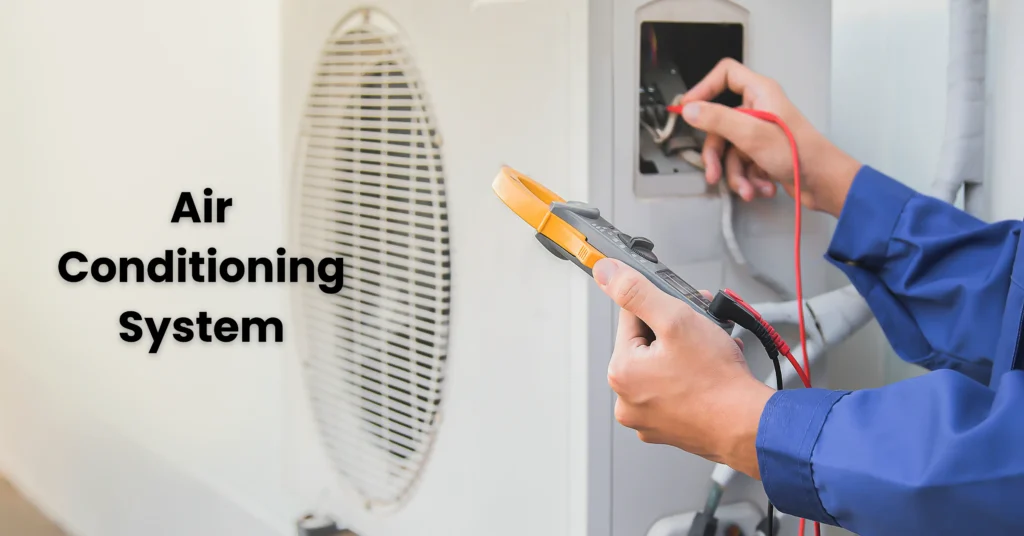

AC gas pressure matters because the system needs the right amount of refrigerant to cool the air properly. When the pressure drops, the AC cannot absorb heat from the room. This reduces cooling and forces the compressor to work harder. Low pressure also affects airflow and increases energy use.
Low refrigerant shows several signs that become noticeable over time. The AC blows weak or warm air, and the outdoor unit runs longer than normal. Ice may form on the pipes due to poor gas flow. At this stage, Green Shirts provide AC maintenance service in Dubai and help detect these issues quickly.
Table of Contents
Precautions Before Checking AC Gas Levels
- Turn Off the Power First: Always switch off the AC before checking gas levels. This prevents electric shock and keeps the outdoor unit safe to handle.
- Work on a Safe and Dry Surface: Make sure the area around the outdoor unit is dry and stable. Wet surfaces increase the risk of slipping or accidents, especially in humid Dubai weather.
- Avoid Checking During Extreme Heat: Dubai’s strong afternoon heat can affect pressure readings. Choose early morning or evening for more accurate results.
- Do Not Open Valves Without Knowledge: Refrigerant can cause cold burns if it leaks. Never open any valve unless you know its purpose and direction.
- Use Basic Safety Gear: Wear gloves and safety glasses to protect your hands and eyes. These simple tools prevent injury during handling.
- Stop If You Notice Any Faults: If you find damaged wires, gas smell, or unusual noise, stop immediately. Call a trained technician to avoid further risk.
Tools You Need for Checking AC Pressure
- A pressure gauge set to read the high and low pressure of the AC. A reliable gauge gives clear and steady readings.
- Color-coded hoses to connect the gauge to the service ports. The colors help avoid wrong connections and keep the link tight.
- An adjustable wrench to open and tighten service port caps. A light grip prevents damage and keeps readings accurate.
- Safety gloves to protect your hands from cold gas or sharp edges. Refrigerant can cause quick cold burns.
- Safety glasses to protect your eyes from sudden gas release. Even a small leak can irritate the eyes.
- A digital thermometer to measure air temperature before taking readings. This helps match the pressure with normal values.
Steps to Connect the Pressure Gauge
1. Turn Off the AC Power
Switch off the AC from the main switch and wait a few seconds for the unit to settle. This prevents electric shock and protects you from sudden fan movement. Check that the outdoor unit is not vibrating or running. Make sure the ground is clean and dry, as many Dubai balconies collect moisture from humid air.
2. Attach the Hoses to the Gauge Set
Fix the blue hose on the low-pressure side and the red hose on the high-pressure side. Tighten both ends until they feel firm but not strained. A solid connection prevents small leaks that can affect PSI readings. Make sure the hoses are not twisted, as straight lines give smoother pressure flow.
3. Find the Service Ports on the Outdoor Unit
Locate the low-pressure port on the thicker pipe and the high-pressure port on the thinner one. Most outdoor units in Dubai collect dust and sand, so wipe the ports before attaching anything. Clean ports help avoid dust entering the AC line and keep the connection smooth.
4. Connect the Blue Hose to the Low-Pressure Port
Press the connector firmly until it locks with a clear click. The hose should sit straight without shaking. A tight lock avoids air gaps that can change the pressure reading. Take a moment to check that the connection is clean and fully sealed.
5. Connect the Red Hose to the High-Pressure Port
Attach the red hose with slow and steady pressure. Do not push too hard, as older ports can weaken from sun exposure. After connecting, pull the hose lightly to confirm stability. A secure fit keeps refrigerant inside and ensures the gauge reads correctly.
6. Start the AC and Open the Gauge Valves Slightly
Turn the AC on and let it run for two to three minutes. This allows the pressure to settle inside the system. Open the valves slowly so the gauge receives refrigerant flow in a controlled way. Keep your hands away from the fan blade and hot compressor area for safety.
How to Read the Gauge Correctly
Start by checking the low-pressure gauge on the blue side. The needle should stay within the normal range for your refrigerant type. If the pressure is too low, the AC may not cool well. If it is too high, the system may be under heavy load. Both conditions show that the AC needs attention.
Look at the high-pressure gauge on the red side after the AC runs for a few minutes. This reading shows how well the AC releases heat from the outdoor unit. In Dubai’s strong heat, the pressure may rise slightly, but it should still stay within the safe limit. Extremely high readings warn of blocked airflow or dirty coils.
Compare both readings with standard values for your refrigerant, such as R22 or R410a. Normal readings confirm that the gas level is correct. Abnormal readings show issues like low gas, blocked coils, or weak airflow.
When to Stop and Call a Professional Technician
You should stop checking AC pressure the moment you see unusual readings, leaking gas, or shaking pipes. If the gauge needle moves too fast or stays far below normal, the AC may have a deeper issue. Strange sounds, warm air, or sudden shutdowns also mean the system needs expert help.
At this point, calling a trained technician is the safest option. Green Shirts provide AC maintenance service in Dubai and handle pressure testing with proper tools. Their team checks the system without releasing gas or harming the unit. They also find hidden faults like weak wiring, clogged coils, or damaged valves.
FAQs
1. Can wrong pressure readings damage my AC?
Yes. Wrong readings can lead to adding too much or too little gas. Both can put pressure on the compressor and reduce cooling.
2. Do all AC models use the same PSI range?
No. Each refrigerant type has its own pressure range. R22 and R410a have different PSI levels, so always check the label on your AC.
3. Why does pressure change during the day in Dubai?
Outdoor heat affects the AC’s working pressure. Dubai’s high temperature can increase PSI during the afternoon and lower it at night.
4. Can I refill AC gas myself after checking pressure?
No. Refilling gas needs skill, proper tools, and safety training. Doing it yourself can cause leaks, burns, or compressor failure.
5. How often should AC gas pressure be checked?
Once a year is enough for most homes. In Dubai, where AC runs many hours daily, checking before summer is the safest choice.
Conclusion
Using a pressure gauge helps you check AC gas levels safely and quickly. Correct readings protect the compressor and improve cooling performance. A clean connection and steady gauge needle give the best results. If the pressure looks abnormal or the unit behaves oddly, stop testing and call a trained technician for safe and proper inspection.