
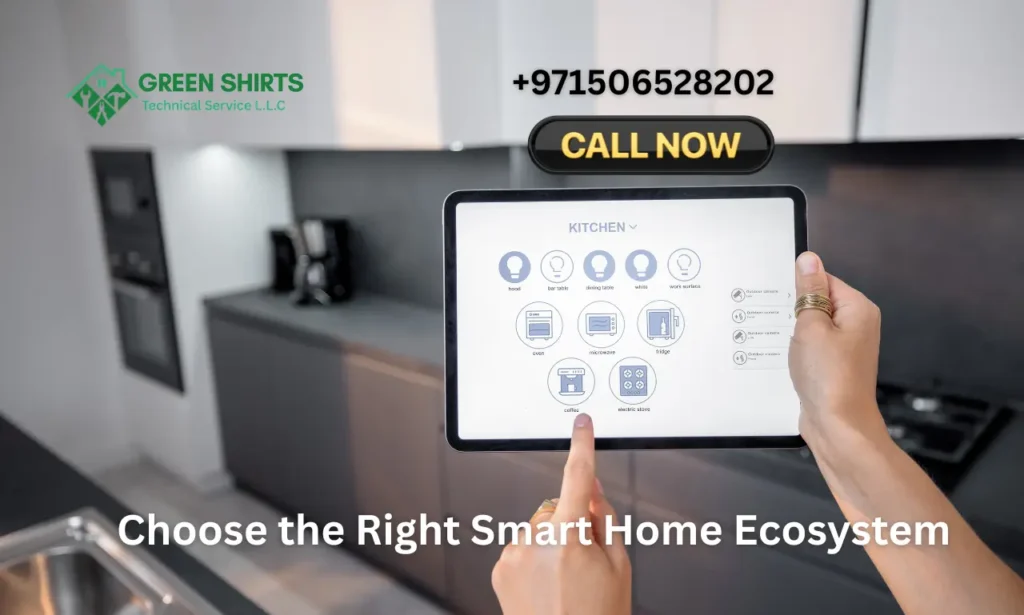
A smart home ecosystem is a network of connected devices that work together to make your home smarter and more convenient. These devices include lights, thermostats, cameras, and voice assistants that can be controlled from one app or through voice commands. Green Shirts provides smart home devices in Dubai, helping homeowners set up reliable and efficient systems that make daily life easier and more secure.
Smart devices work together to automate your home. For example, your lights can turn on when you arrive, or your thermostat can adjust based on the weather. Building a connected smart home saves time, reduces energy costs, and enhances comfort.
Table of Contents
Why Choosing the Right Smart Home Ecosystem Matters
Choosing the right smart home ecosystem is an important decision that affects how smoothly your devices work together. A good ecosystem ensures your lights, cameras, locks, and thermostats communicate without errors. When devices connect through one reliable system, you get full control from a single app or voice assistant, making your daily routine simple and stress-free.
If you choose the wrong ecosystem, you may face problems like devices not syncing, slow responses, or limited automation options. This can lead to frustration and extra expenses when replacing incompatible products. It’s always better to plan your setup based on the ecosystem that fits your needs and the devices you plan to add in the future.
The right ecosystem also ensures long-term flexibility. You can easily expand your setup with new devices without worrying about compatibility issues. It helps create a stable and future-ready smart home that grows with your lifestyle.
Top Smart Home Ecosystems in 2026
Apple HomeKit
Apple HomeKit continues to stand out in 2026 for its strong focus on privacy, data security, and seamless integration with other Apple devices such as iPhones, iPads, and Macs. It provides a clean and simple interface that makes managing smart lights, locks, and cameras easy.
With improved support for the Matter protocol, more non-Apple devices now work smoothly within the HomeKit system. This makes it a great choice for users who want a private, secure, and reliable smart home setup.
Google Home (Nest)
Google Home, now more deeply connected with Nest products, remains one of the most popular and flexible ecosystems available. It offers smooth voice control through Google Assistant and integrates perfectly with Android devices and Google services like Maps, Calendar, and YouTube.
The platform also supports a large number of smart devices from various brands. With expanding Matter compatibility, Google Home has become even more versatile and future-ready, ideal for people who value both convenience and automation.
Amazon Alexa
Amazon Alexa continues to lead in 2026 thanks to its huge range of compatible devices and affordable smart home options. Alexa’s voice control system is reliable and easy to use, allowing users to manage lights, appliances, and security systems through simple voice commands.
The platform also supports thousands of third-party integrations, making it perfect for homeowners who want maximum flexibility and customization. While privacy settings should be adjusted carefully, Alexa still offers excellent overall value and versatility.
Samsung SmartThings
Samsung SmartThings remains a powerful and flexible platform that connects devices from many different brands. It supports multiple communication standards such as Zigbee, Z-Wave, and Wi-Fi, allowing a wide range of smart devices to work together smoothly. With increasing support for Matter, SmartThings has become even more adaptable.
It’s an ideal choice for users who own several Samsung appliances or want a central hub that brings together various smart home products under one system.
Smart Device Compatibility and Connectivity Guide
Choosing smart home devices that connect properly is the key to a smooth setup. Each ecosystem such as Alexa, Google Home, Apple HomeKit, or Samsung SmartThings supports specific devices. If your devices do not match the same system, you may face pairing problems or limited control. Always check compatibility before buying to avoid these issues.
Most smart devices use Wi-Fi, Bluetooth, Zigbee, Z-Wave, or the new Matter protocol. Matter makes it easier for products from different brands to work together even if they belong to separate ecosystems. It gives you more freedom to mix and match devices while keeping everything under one system.
Look for devices labeled “Works with Alexa” or “Compatible with Google Home.” This ensures smooth connection and easier control. Avoid mixing too many systems because it can cause syncing delays and confusion.
User Experience and Mobile App Performance
Smooth User Experience
A smart home ecosystem should make your life easier, not more complicated. The mobile app is the main tool for managing your devices, so it needs to be simple and fast. A good app lets you control your lights, cameras, and thermostats instantly without confusion or delay. It should be easy for anyone in the family to understand and use.
Comparing App Interfaces Across Ecosystems
Apple HomeKit and Google Home focus on clean layouts and simple navigation, making them ideal for everyday users. Alexa and SmartThings, on the other hand, offer more advanced options for people who like to customize settings. The best app allows quick device setup, automation routines, and instant control through one dashboard.
Performance and Reliability
A high-quality app should respond quickly and maintain a stable connection with your smart devices. Lag or app crashes can make your experience frustrating. Before choosing an ecosystem, test its app to see how smoothly it runs and how well it connects with different devices.
Best Voice Assistants for Smart Home Automation
Amazon Alexa
- Amazon Alexa is one of the most popular choices for controlling smart home devices. It supports a huge range of products from different brands and allows users to create custom routines for automation. Alexa works well for managing lights, locks, cameras, and other smart devices, making it a versatile option for a connected home.
- Ideal for: Homes with many devices from different brands that need flexible automation.
- Note: Make sure to adjust privacy settings and verify that your devices are compatible with Alexa.
Google Assistant
- Google Assistant excels at understanding natural language and integrating with Google services like Calendar, Maps, and Gmail. It allows voice control for smart home devices and can automate tasks through routines and triggers. Google Assistant works well with a wide variety of smart products and is known for reliable performance.
- Ideal for: Users who rely on Google apps and want easy voice control with strong automation capabilities.
- Note: Check that your devices are fully compatible with the Google ecosystem.
Siri via Apple HomeKit
- Siri works with Apple HomeKit to offer smooth voice control and strong privacy protections. It integrates tightly with iPhones, iPads, and Macs, making it simple to control lights, thermostats, and other smart devices through voice commands.
- Ideal for: Apple users who value privacy, simplicity, and seamless integration with their existing devices.
- Note: Device selection may be more limited, so ensure your devices support HomeKit.
Combine Multiple Smart Home Ecosystems
You may want to use devices from different smart home platforms in the same home. For example, you might have Alexa speakers, Google Nest cameras, and Apple HomeKit lights. Combining ecosystems can expand your options but requires careful planning to avoid compatibility problems.
The easiest way to manage multiple ecosystems is through devices or hubs that support cross-platform communication. Matter, the new smart home standard, makes it easier for devices from different brands to work together. You can also use automation apps or bridges that connect systems and allow unified control from one interface.
When combining ecosystems, it’s important to keep things organized. Limit the number of apps you use, clearly label devices, and test routines before relying on them daily. This helps prevent delays, miscommunication, or devices not responding correctly.
Conclusion
Choosing the right smart home ecosystem is key to building a connected and convenient home. The right system ensures your devices work together smoothly, saves time, and makes daily tasks easier. Consider compatibility, app performance, voice assistant options, and privacy before making a decision.
Look for an ecosystem that matches your lifestyle and future plans. Whether you prefer Alexa, Google Assistant, Apple HomeKit, or SmartThings, the goal is a system that is reliable, easy to use, and expandable. In Dubai, Green Shirts can help you select and set up the perfect smart home ecosystem for your needs.